
Time Management for Caterers: How to Structure Your Day Without Burning Out
Running a catering business isn’t just cooking and events—it’s logistics, sales, planning, staffing, admin, and constant decision-making. Most caterers aren’t bad at time management… they’re just managing too many things at once.
If your days feel reactive, fragmented, or never quite finished, the issue usually isn’t effort—it’s structure.
Here’s how successful caterers organize their time more intentionally so they can stay profitable and sane.
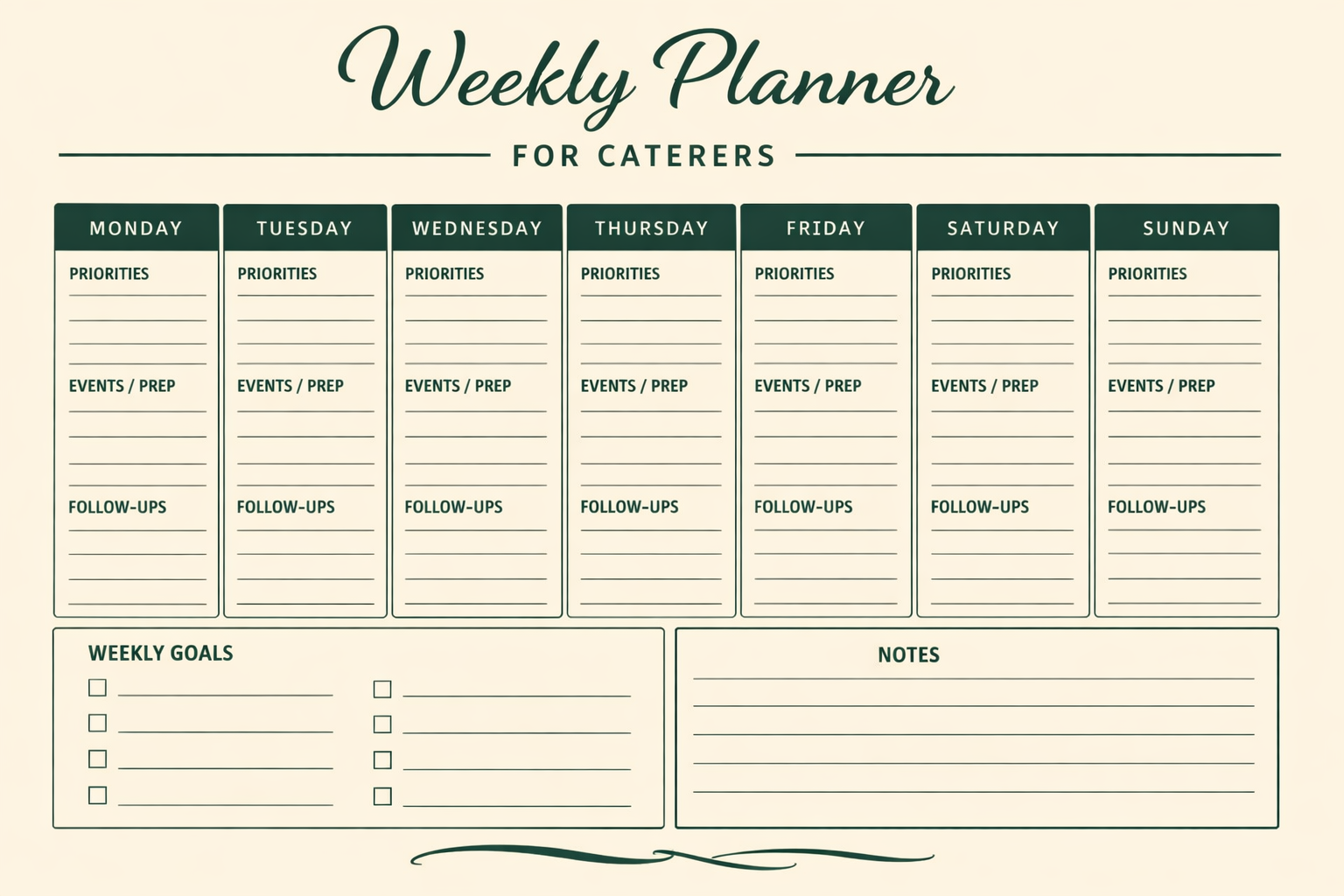
Start With Energy, Not Tasks
One of the biggest mistakes caterers make is building their schedule around a to-do list instead of their energy.
Your day likely has three very different types of work:
High-focus work (pricing events, planning menus, managing staff)
Operational work (prep, shopping, setup, cleanup)
Reactive work (emails, inquiries, last-minute changes)
Instead of mixing these together, batch similar work into dedicated time blocks.
Example:
Morning: pricing, planning, admin decisions
Midday: prep, logistics, vendor coordination
Afternoon: emails, follow-ups, client communication
This reduces mental switching and makes each hour more productive.
Create “Non-Negotiable” Admin Blocks
Admin work doesn’t feel urgent—until it suddenly is.
To avoid constant interruptions:
Set one or two fixed admin windows per day
Handle emails, inquiries, and follow-ups only during those times
Turn off notifications outside those windows when possible
This prevents your day from being hijacked by every new request while still ensuring nothing falls through the cracks.
Standardize What You Can (Even If You Think You Can’t)
Many caterers believe every event is “completely custom,” which leads to reinventing the wheel daily.
Look for areas to standardize:
Menu packages or base pricing tiers
Delivery, staffing, and service fees
Common add-ons and upgrades
Quote and proposal formats
Standardization doesn’t remove creativity—it protects it by freeing your time and mental bandwidth.
Separate “Sales Time” From “Event Time”
One of the hardest parts of catering is juggling future business while executing current events.
A simple rule:
Sales happens when you’re not in event mode
Event execution happens without distractions
That means:
No pricing quotes while actively prepping or on-site
No event planning while responding to new inquiries
Clear boundaries reduce errors and stress—and help you show up more present for both.
Use Checklists to Reduce Decision Fatigue
Decision fatigue is real, especially in catering.
Create reusable checklists for:
Event prep
Shopping and inventory
Staffing coordination
Setup and breakdown
Post-event follow-ups
Checklists remove the need to “remember everything” and ensure consistency—even on busy weeks.
Protect One “No-Event” Day Per Week (If Possible)
If your schedule allows it, designate one day per week with:
No events
No site visits
No last-minute changes
Use this day for:
Planning
Pricing and proposals
Systems improvement
Catching up and getting ahead
This single boundary can dramatically reduce burnout over time.
Let Technology Handle the Repetitive Work
Time management isn’t just about discipline—it’s also about delegation.
If you’re spending hours:
Writing similar quotes over and over
Manually calculating pricing
Following up on leads
Re-entering the same information
That’s a sign your systems—not your work ethic—need support.
Tools that automate quoting, follow-ups, and lead management can reclaim hours every week and reduce mental load, especially during peak seasons.
End Your Day With Tomorrow in Mind
Before ending your workday:
Write down the top 3 priorities for tomorrow
Close any open loops you can
Note what doesn’t need your attention yet
This small habit prevents nighttime stress and helps you start the next day with clarity instead of chaos.
The Bottom Line
Catering is demanding—but it doesn’t have to feel overwhelming every single day.
With clearer structure, better boundaries, and smarter systems, you can:
Work fewer frantic hours
Reduce last-minute stress
Make space for creativity again
And actually enjoy running your business
Time management isn’t about doing more—it’s about doing the right things, in the right order, with less friction.
